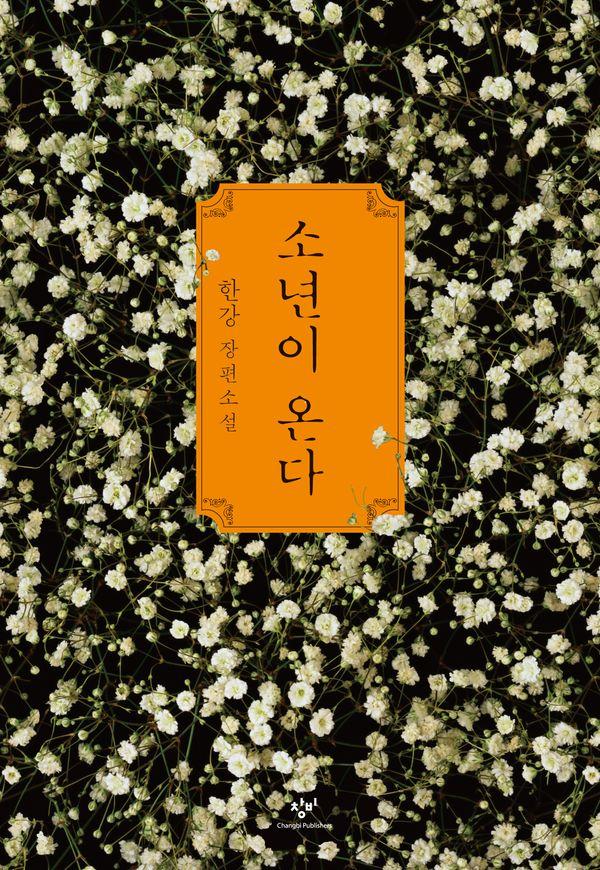
Human Acts by Han Kang (Winner of the 2024 Nobel Prize in Literature)
Author Han Kang · Publisher Changbi · Published 2014-05-19 · ISBN 9788936434120 About the Book'The Ten Days of that City' and Han Kang's earnest voice comforting the boy 『Human Acts』, based on thorough historical research and interviews, vividly portrays the situation during the Gwangju Democratization Movement for ten days starting from May 18, 1980, and the stories of those left...
See full description ↓Description
Author Han Kang · Publisher Changbi · Published 2014-05-19 · ISBN 9788936434120
About the Book
'The Ten Days of that City' and Han Kang's earnest voice comforting the boy
『Human Acts』, based on thorough historical research and interviews, vividly portrays the situation during the Gwangju Democratization Movement for ten days starting from May 18, 1980, and the stories of those left behind, using Han Kang's unique sophisticated and dense prose. Dong-ho, a middle school third-grader at the time of the May 18th Incident, witnesses the death of his friend Jeong-dae and subsequently helps manage the bodies at the provincial office's Sangmugwan. As bodies are brought daily into the Sangmugwan, which serves as a joint memorial hall, the fifteen-year-old boy lights candles to console the silent souls of the deceased, whose bodies seem to have been emptied of "a little bird." Amidst the bodies that "seem to stage another protest by emitting the stench of death," he agonizes, recalling the horrific death of his friend Jeong-dae.
“Souls don’t have bodies. How could they open their eyes and watch us?
(…) Something like a bird suddenly left the face of his grandmother, whose eyes were closed. Seeing her wrinkled face instantly turn into a corpse, he stood blankly, not knowing where that little bird-like thing had gone.
Could the souls of the people in the Sangmugwan now have suddenly left their bodies like birds? Where could those startled birds be?” (pp. 22-23)
“How long does a soul linger near its body?
Does it perhaps flutter like wings? Does it make the edge of a candlelight flicker? (...)
I will not forgive. (...) I will not forgive anything. Not even myself.” (p. 45)
The May song that speaks for the unjustly departed souls
Jeong-dae, along with Dong-ho, is shot dead by martial law forces during a protest march. His older sister, Jeong-mi, who had come to work in a factory before finishing middle school, postponing her dreams to support her younger brother, also goes missing that spring, leading to a family tragedy. The innocent daily lives of ordinary people shattered by the brutal violence of the state, and the injustice and sorrow for the young lives innocently killed, are represented by Jeong-dae's desperate voice. It is said that during the May 18th Incident, soldiers were issued 800,000 rounds of ammunition to suppress the 400,000 citizens of Gwangju. Even in such a harsh atmosphere, the intense power that drew even these young children to the protest site to resist the state's injustice was nothing but "a clean yet terrifying conscience." Thus, the children "felt the pulse of the largest and most sublime heart in the world" and together formed the magnificent "vein of conscience" created by hundreds of thousands of citizens.
"I wanted to grow taller.
I wanted to do forty push-ups in a row.
Someday, I wanted to hold a woman. To lay my trembling hand on the heart of that woman, whom I would be allowed for the first time, whose face I did not know. (...)
Think of the cold trigger. / Think of the warm finger that pulled it. / Think of the eyes that aimed at me. / Think of the eyes of the person who ordered the shot. // I want to see their faces, I want to hover over their sleeping eyelids, I want to suddenly enter their dreams, I want to hover over their foreheads and eyelids all night long. Until they see my bleeding eyes in their nightmares. Until they hear my voice. Why did you shoot me, why did you kill me?" (pp. 57-58)
“The young friends who remained in the provincial office that day probably had similar experiences. They must have judged that the jewel of their conscience was worth exchanging for death. But now, nothing is certain. The children who sat huddled under the window with guns, saying they were hungry, the children who asked if they could quickly bring and eat the castella and Fanta left in the small meeting room—what did they know about death to make such a choice?” (p. 116)
The novel reveals tragic aspects of modern Korean history through the lives of the older brothers and sisters who worked with Dong-ho at the Sangmugwan before and after the May 18th Incident. The suffering of those for whom being alive becomes a humiliating agony, or who struggle with a sense of powerlessness unable to recover their daily lives, continues to be an ongoing reality even 35 years later. Kim Eun-suk, who experienced the May 18th Incident as a third-year student at Soopia Girls' High School, abandoned her university life, which was marked by protests shouting "Down with Chun Doo-hwan," and worked as an editor at a small publishing house. She was dragged to Seodaemun Police Station over a manuscript censorship issue and was "slapped seven times." Lim Seon-ju, who was expelled for union activities to protect "our noble selves" while working in a sewing factory, later joined the Sangmugwan while working at a dress shop, and after being arrested by the police, suffered horrific torture that caused incessant bleeding. Kim Jin-su, a university student who was actively involved in the Sangmugwan, also endured a terrible prison life after his arrest, including "Monami ballpoint pen" torture and genital torture, eventually suffering from trauma and committing suicide. By vividly depicting the state's brutality, the novel raises fundamental questions about human cruelty and evil, which are perpetrated not only in the past but also in the present, not only in Korea but also worldwide, with "the same cruelty seemingly etched into their genes."
The following paragraph could not be fully included in the book due to censorship. If so, the question that remains for us is this: What is human? What must we do so as not to be what humans are? She remembered the four lines of text that followed, which had been erased with a black marker. (...) She did not trust humans. She did not fully trust any expression, any truth, any eloquent sentence. She knew that one must live through persistent suspicion and cold questions. (pp. 95-96)
“What I found most incomprehensible when I first encountered the资料 was the repeated killings, not even for the purpose of arrest. Daytime violence without guilt or hesitation. The commanders who encouraged and ordered such cruelty. (...) That’s Gwangju. So Gwangju was another name for something isolated, trampled by force, desecrated, something that should not have been desecrated. The fallout is not over yet. Gwangju has been reborn and murdered countless times. It has been rebuilt, bleeding and exploding, festering.” (pp. 206-207)
Han Kang's hand leading "towards where the flowers bloom"
Through this novel, Han Kang painfully unfolds the hidden stories of the individuals who suffered in silence during the May 18th Incident, centered around the death of fifteen-year-old Dong-ho. She soothes their pain and fulfills her destined calling to bear witness to that era. Reflecting on the difficult daily lives of those for whom "having survived" is rather a disgrace, she shares their unhealed memories. Author Han Kang “thought of Dong-ho, surprised by the sensation of a clean, well-dried sheet-like breeze wrapping around her face and arms, while walking under the trees at the end of a hot and humid summer.” Remembering Dong-ho, who could not pass through that spring's warm May and "could not cross that summer, who would never again meet such a morning," the author reminds us that "everyone we meet every day is human" and earnestly asks what answer we, as humans, can give them. Thus, she prays that there will no longer be any unjustly departed souls, and that wounded souls may move "towards the bright side, towards the light, towards where the flowers bloom" and find peace. The small candles lit by author Han Kang with all her heart to commemorate the unbloomed boy Dong-ho amidst the "snow-covered graves" of the May 18th victims will add warmth to this sorrowful world.
After losing you, our time became evening.
Our homes and streets became evening.
In this evening, which neither darkens further nor brightens again, we eat, walk, and sleep. (p. 79)
Because I couldn't hold a funeral after you died,
My life became a funeral. (p. 99)
Table of Contents
Chapter 1: The Young Bird
Chapter 2: Black Breath
Chapter 3: Seven Cheeks
Chapter 4: Iron and Blood
Chapter 5: Eyes of the Night
Chapter 6: Towards the Blooming Flowers
Epilogue: Snow-Covered Lamp
Product Details
Related products
The book is priced at its original Korean retail price (KRW 1,000 = A$1). Air freight is charged separately at checkout.
Orders close every Tuesday, are sent to Korea on Wednesday, and arrive in store one week after dispatch — 8 to 14 days from your order. Order today and pick up from Wed 4 Nov; we'll email you as soon as your books arrive.
Collect at the book corner in our Lidcombe or Eastwood store. No home delivery. Please have your order number and name ready.
First book A$15 + A$6 per extra book — 1 book $15 · 2 books $21 · 3 books $27 · 4 books $33, calculated automatically at checkout. The more books you order together, the lower the cost per book.
Titles temporarily out of stock in Korea may be delayed by about one week. If a title is out of print or unavailable, we refund that book in full and proceed with the rest of your order.
 Human Acts by Han Kang (Winner of the 2024 Nobel Prize in Literature)
$22.99
Human Acts by Han Kang (Winner of the 2024 Nobel Prize in Literature)
$22.99