
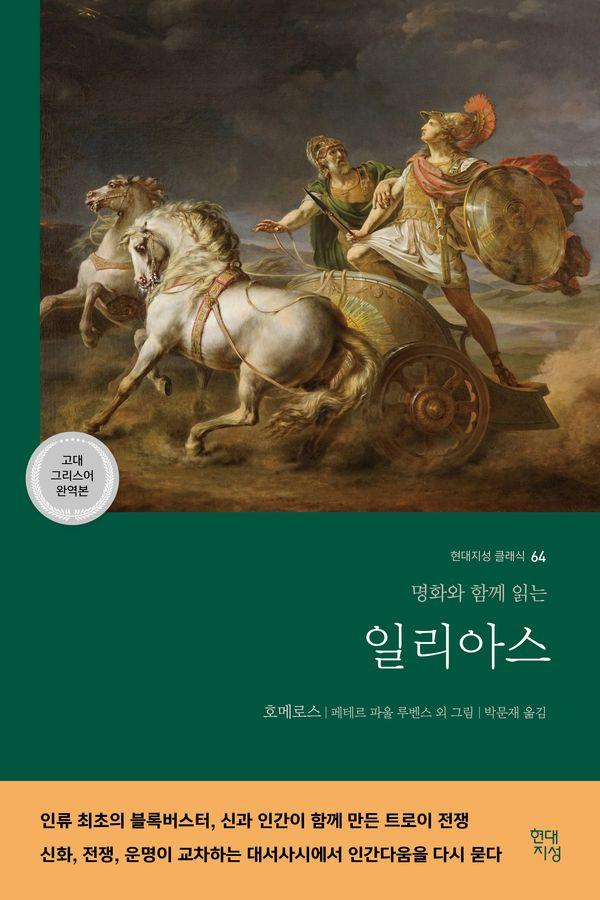
The Iliad: Read with Masterpieces (Complete Ancient Greek Translation) - Hyun Ji Sung Classic 64
Author Homer · Publisher Hyeondae Jisung · Published 2025-04-18 · ISBN 9791139721966 About the BookIn an epic where myths, wars, and destinies intertwine,we re-examine 'humanity'.Homer's The Iliad is one of the oldest monumental works of Western literature, a magnificent epic that fiercely clashes the destinies of gods, humans, and heroes against the backdrop of a vast battlefield. And within this...
See full description ↓Description
Author Homer · Publisher Hyeondae Jisung · Published 2025-04-18 · ISBN 9791139721966
About the Book
In an epic where myths, wars, and destinies intertwine,
we re-examine 'humanity'.
Homer's The Iliad is one of the oldest monumental works of Western literature, a magnificent epic that fiercely clashes the destinies of gods, humans, and heroes against the backdrop of a vast battlefield. And within this ancient epic lies a deep insight into universal human emotions and fate.
Although it only recounts 50 days of the 10-year Trojan War, it encapsulates universal themes that permeate human history, such as rage and honor, love and sorrow, the brutality of war and the bravery of heroes, the intervention of gods and the destiny of humanity.
The heroic deeds unfolding within the mythological worldview of the Olympian gods vividly portray the ideals and values of the ancient Greeks, but ultimately, the message that humans must choose and bear their own destiny offers profound reflection for us today. This is precisely why The Iliad is not merely a 'war chronicle' of anger, fighting, and intrigue on the battlefield, but a philosophical text that interprets the entirety of Western civilization, and a source of literary imagination that, transcending 3,000 years, is still read, interpreted, and applied.
Anger and love, hatred and forgiveness intertwine,
becoming the heart of millennia of literature and drama.
The Iliad is not a mere ancient war history, but a drama that showcases the extremes of human emotion. It begins in the tenth year of the Trojan War with the rage of Achilles, the hero of the Achaean army. And this rage of Achilles leads to a single individual's pride threatening the entire community.
Beginning with the quarrel between Agamemnon, son of Atreus, and the noble Achilles, The Iliad unfolds around the heroes' rage and honor, the brutality of war, and the intervention of the gods. Within this fierce narrative, it explores the depths of human nature through intense human emotions, familial love and devotion, the arrogance of power and the resulting catastrophe, and the drama of revenge and compassion. The Iliad offers timeless resonance by presenting profound insights into the destructive consequences of individual rage, the human condition that must choose and bear its own destiny despite fate and divine influence, and the faint possibility of reconciliation even amidst conflict.
Let's examine some key scenes. The sight of Agamemnon and Achilles quarreling and parting ways reminds us of power struggles and discord within an organization. Achilles's rage, feeling his accomplishments unacknowledged and himself treated unfairly, is no different from the frustration we might experience.
Agamemnon's greed and arrogance cause discord among the heroes and alter the course of the war. This warns of how great a disaster a leader's misguided judgment can bring upon a community, and also raises important questions about leadership in modern society.
The farewell scene between Hector and Andromache shows familial love and devotion shining through the tragedy of war. Hector's departure for the battlefield, leaving behind his beloved wife and son, deeply resonates with all who dedicate themselves to family and community across all ages.
Furthermore, Achilles's act of defiling Hector's body in revenge shows the depth of hatred and the difficulty of forgiveness, but the scene where he eventually accepts Priam's plea and returns the body offers a glimpse of human compassion and the possibility of reconciliation.
In this way, The Iliad vividly portrays complex and multifaceted human emotions, eliciting deep empathy and reflection that transcend time.
Throughout the text, one can find vivid and thrilling scenes from The Iliad. The silver-bowed Apollo's arrows spreading disaster through the Greek camp, the heralds taking Briseis at Agamemnon's stern command, Zeus whispering stratagems to Agamemnon through the god of dreams Oneiros, shining-helmeted Hector addressing the Achaean army, the critical moment Menelaus is wounded by Pandarus's arrow, Diomedes's display of valor as he charges in his chariot, Diomedes attacking Aeneas with a huge stone, Aphrodite asking her beloved brother Ares for help, the heartbreaking farewell of Hector and Andromache, the fierce battles of the gods, the final fated duel between Achilles and Hector — it is filled with intense moments that continuously make readers' hearts pound. In particular, the sounds of heroes' armor clashing, the thunderous impact of spears and shields, and the shouts of battle are vividly described, allowing readers to feel an overwhelming atmosphere as if they were in the midst of the battlefield.
103 vivid masterpieces and images, rich explanations and footnotes for
a multidimensional reading, a classic for today's readers.
Hyeondae Jisung Classic's complete ancient Greek translation delicately translated and refined the ancient Greek poetic rhythm, style, and order as much as possible, while ensuring Korean readers can immerse themselves in the text. It faithfully conveys the grandeur and delicate emotions characteristic of ancient epics, providing readers with a vivid and immersive experience as if watching a grand historical drama. The 103 vivid masterpieces and images aid readers' understanding, and 435 footnotes immediately resolve questions about unfamiliar place names, characters, mythological backgrounds, and ancient Greek customs. Furthermore, it meticulously explains the complex genealogies of heroes involved in the Trojan War and the relationships between the gods, kindly guiding readers to follow the vast narrative more easily and engagingly. In particular, since The Iliad covers events in the tenth year of the Trojan War, it is difficult to fully grasp the content without background knowledge. To help readers easily understand, the causes and initial developments of the Trojan War are detailed with 12 masterpieces, assisting anyone challenging this masterpiece to easily grasp the background.
This complete translation will offer new insights and a profound reading experience not only to readers encountering The Iliad for the first time but also to those who have read it before. Through this timeless classic, we hope you will have a special experience exploring the origins of Western literature and deeply contemplating the eternal values of human existence.
Table of Contents
Book 1: The Rage of Achilles
Book 2: The Catalogue of Ships
Book 3: The Duel of Paris and Menelaus
Book 4: The Trojans Break the Truce and the Battle Begins
Book 5: The Exploits of Diomedes
Book 6: Hector and Andromache's Farewell
Book 7: The Duel of Hector and Ajax, and the Truce and Burial of the Dead
Book 8: Hector and the Trojan Onslaught
Book 9: Agamemnon Attempts to Reconcile with Achilles
Book 10: The Reconnaissance of Diomedes and Odysseus
Book 11: The Exploits of Agamemnon and Hector's Counterattack
Book 12: The Battle for the Wall
Book 13: The Battle by the Ships
Book 14: Hera Deceives Zeus and the Greek Counterattack
Book 15: The Great Trojan Counterattack
Book 16: The Exploits of Patroclus
Book 17: The Battle for Patroclus's Body
Book 18: Achilles's New Armor
Book 19: The Reconciliation of Achilles and Agamemnon
Book 20: The Great Exploits of Achilles
Book 21: The River Xanthus and the Gods Enter the Battle
Book 22: The Death of Hector
Book 23: The Funeral of Patroclus and the Funeral Games
Book 24: The Funeral of Hector
Commentary | Park Mun-jae
Composition of the Greek and Trojan Armies
Map of Ancient Greece and the Anatolian Peninsula
Key Personal Names
Key Divine Names
Product Details
Related products



The book is priced at its original Korean retail price (KRW 1,000 = A$1). Air freight is charged separately at checkout.
Orders close every Tuesday, are sent to Korea on Wednesday, and arrive in store one week after dispatch — 8 to 14 days from your order. Order today and pick up from Wed 28 Oct; we'll email you as soon as your books arrive.
Collect at the book corner in our Lidcombe or Eastwood store. No home delivery. Please have your order number and name ready.
First book A$15 + A$6 per extra book — 1 book $15 · 2 books $21 · 3 books $27 · 4 books $33, calculated automatically at checkout. The more books you order together, the lower the cost per book.
Titles temporarily out of stock in Korea may be delayed by about one week. If a title is out of print or unavailable, we refund that book in full and proceed with the rest of your order.
 The Iliad: Read with Masterpieces (Complete Ancient Greek Translation) - Hyun Ji Sung Classic 64
$30.00
The Iliad: Read with Masterpieces (Complete Ancient Greek Translation) - Hyun Ji Sung Classic 64
$30.00