
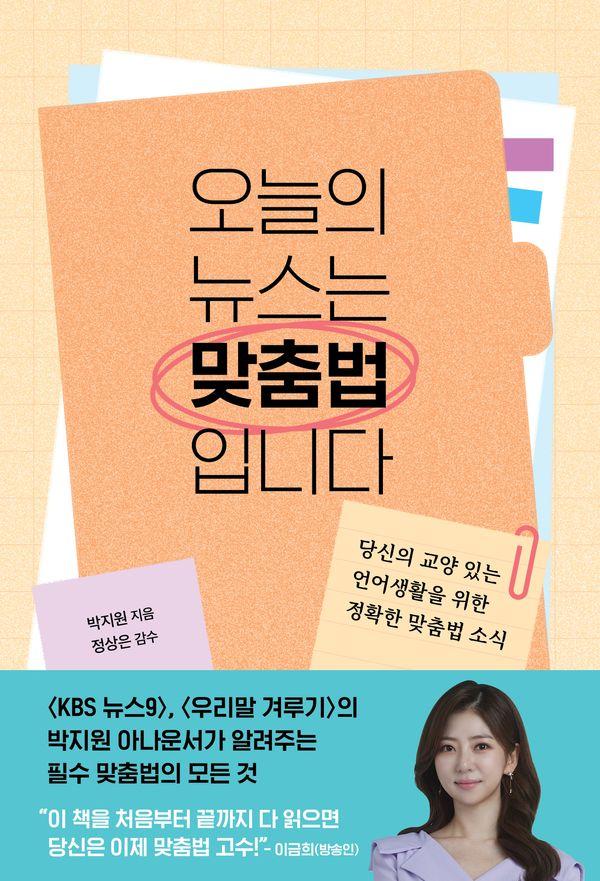
Today's news is spelling.
Author Park Ji-won · Publisher CRETA · Published 2025-12-07 · ISBN 9791192742588 Book IntroductionIf you waver between ‘dwae’ and ‘doe’,Don't hesitate, open this book.There are three common spelling mistakes that confuse many people: ‘dwae’ vs. ‘doe’, ‘waenji’ vs. ‘wen’, and ‘bwaeyo’ vs. ‘boekyo’. It's hard to gauge how much people have hesitated over these. Even if you try to remember,...
See full description ↓Description
Author Park Ji-won · Publisher CRETA · Published 2025-12-07 · ISBN 9791192742588
Book Introduction
If you waver between ‘dwae’ and ‘doe’,
Don't hesitate, open this book.
There are three common spelling mistakes that confuse many people: ‘dwae’ vs. ‘doe’, ‘waenji’ vs. ‘wen’, and ‘bwaeyo’ vs. ‘boekyo’. It's hard to gauge how much people have hesitated over these. Even if you try to remember, thinking, "I looked this up last time too…", it's not easy. And that's not the only problem. ‘Eotteohge’ vs. ‘eotteokhae’, ‘oraenman-e’ vs. ‘oraetman-e’, ‘daeyo’ vs. ‘deyo’, ‘an’ vs. ‘an’, ‘eyo’ vs. ‘yeyo’, ‘mandutguk’ vs. ‘manduguk’, ‘ui’ vs. ‘e’… A string of confusing spellings follows as soon as you turn away.
How can one remember them easily? If you know that ‘dwae’ is a shortened form of ‘doeeo’, and ‘daeyo’ is a shortened form of ‘dago haeyo’, and if you understand that ‘-ui’ is mainly used to indicate possession and belonging, while ‘-e’ is mainly used to indicate place, time, and direction, then they won't be easily forgotten. Furthermore, if you understand that due to the inter-vowel ‘s’, it should be written as “mandutguk” not “manduguk”, you will naturally realize that “sundaetguk” is correct, not “sundaeguk.”
Just as the world felt clearer when you first learned Hangeul as a child and read the letters on signs, the more you learn correct expressions and spellings, the more you can progress in the world of language with confident writing, free from hesitation.
Can I eat this bread (deyo/dwaeyo)?
What kind of fortune is this (waen/wen) tteok!
See you again (boekyo/bwaeyo) next time.
How am I supposed to do this by myself (eotteohae/eotteokhae/eotteokhae)!
Everyone knows there’s a wrap-up party (dwitpuri/dwipuri) tomorrow, right?
I’m going home early today (eyo/yeyo).
When we use correct expressions,
We appear neat and proper.
There's no one in professional or social life who doesn't care about their image. It's common to write reports and emails at work, and exchange opinions via messenger. While doing one's job well is most important, being able to express and convey one's work to superiors and colleagues in proper sentences helps create a good image. If important reports contain spelling errors or incorrect usage of basic vocabulary, trustworthiness in that person inevitably declines.
The online job search platform 'Saramin' once surveyed 'evaluation of spelling mistakes in self-introductions'. A staggering 88.4% of HR managers responded that they negatively evaluated self-introductions with spelling mistakes. The primary reason cited was 'a perceived lack of basic competency'. A matchmaking company researched 'dating etiquette to maintain in a relationship', and 32.2% of people responded that the most off-putting moment with a partner was 'repeatedly making spelling mistakes'.
On the internet, examples of incorrect spellings often appear as humor. When someone broke up with their partner and sent a message saying, "Na haeeojyeosseo" (I broke up, with a misspelling), they received a reply, "With King Sejong...?" Expressions like ‘he-eojida’ and ‘hae-eojida’ are frequently mistaken because their forms or pronunciations are very similar. Other examples include ‘batchida’ and ‘bachida’, ‘gyeoljae’ and ‘gyeolje’, ‘jotda’ and ‘jjotda’, ‘gareuchida’ and ‘garikida’, ‘damgeuda’ and ‘damguda’, ‘anchida’ and ‘anjhida’, and ‘machida’ and ‘machuda’. If one properly understands their precise meanings, confusion will no longer arise.
This book is structured in three parts. Headline 1 covers essential spellings, Headline 2 addresses frequently confusing spellings, and Headline 3 introduces spellings that can help you become a master of orthography. Interspersed throughout are 'surprisingly standard words' that people generally don't know, and vocabulary that will help with reading comprehension. It also explains 'pronunciation tips' that are good to know. If you need to prepare just one book for cultured language life, "Today's News is About Spelling" will certainly fulfill that role.
Table of Contents
Foreword
Introduction
Spelling Test
Headline 1. 25 Spellings You Need to Know Right Now
01. Waenji vs. Wen
02. Daeyo vs. Deyo
03. Dwae vs. Doe
04. Deulleuda vs. Deullida
05. Dareuda vs. Teullida
06. Sundaetguk vs. Sundaeguk
Mandutguk vs. Manduguk
07. Jjigae vs. Jjige
08. Buryaburya vs. Bullyabulya
[Breaking News] 'Surprisingly Standard Words' Delivered
09. Huihanhada vs. Hianhada
10. Gudi vs. Guji
11. Eoeopta vs. Eoeuiopta
12. An vs. Anh
13. Natda vs. Nahda
14. Gareuchida vs. Garikida vs. Gareukida
15. Bwaeyo vs. Boeyo
16. Bekkida vs. Baekkida
17. Myeochil vs. Myeot il
18. Jaejaknyeon vs. Jejaknyeon
[Breaking News] 'Surprisingly Standard Words' Delivered
19. Ilbureo vs. Ilburo
20. Nungop vs. Nunkkop
21. Changpihada vs. Chaengpihada
22. Seolleada vs. Seolleida
23. Heeojida vs. Haeeojida
24. Yeokhal vs. Yeokhal
25. Geumsae vs. Geumsae
Quiz Time
Headline 2. 29 Spellings That Keep Confusing You
01. Eotteohge vs. Eotteokhae vs. Eotteohae
02. Ui vs. E
03. Eomuljjeok vs. Eomuljjeong
04. Ittaga vs. Itdaga
05. Oraenman-e vs. Oraenman-e
Oraetdong-an vs. Oraendong-an
06. Deun vs. Deon
07. Doere vs. Doeryeo
[Breaking News] Literacy Tips Received
08. Eyo vs. Yeyo
09. Kkongdari vs. Kkodari
10. Simsimhada vs. Seumseumhada
11. Jigeusi vs. Jigeusi
12. Ilche vs. Iljeol
13. Gwi-ttim vs. Gwi-tteum
14. Kkopda vs. Kkojda
15. Ugyeoneota vs. Uggyeoneota
16. Danggida vs. Daenggida vs. Ttanggida
[Breaking News] Literacy Tips Received
17. Jjagibgi vs. Jjagibgi
18. Anchida vs. Anjhida
19. Damgeuda vs. Damguda
20. Batchida vs. Bachida
21. Jjodellida vs. Jjodallida
22. Gyeoljae vs. Gyeolje
23. Dwipuri vs. Dwitpuri
24. Geyo vs. Kkeyo
[Breaking News] Literacy Tips Received
25. Neobi vs. Neolbi
26. Ganeung-han han vs. Ganeung-han
27. Sseurebatgi vs. Sseurebadi
28. Meonjitteori vs. Meonjiteori
29. I vs. Hi
Quiz Time
Headline 3. 19 Spellings That Will Make You a Spelling Master
01. Mitgiseupnikka vs. Mitgyeojiseupnikka
02. Jotda vs. Jjotda
03. Roseo vs. Rosseo
04. Joeun jumal doeseyo
05. Bulgeurakpureurak vs. Ulgeurakbulgeurak
06. Haelsukada vs. Haelsseukada
[Special Report] Good 'Pronunciation Tips' to Know
07. Kkeopjil vs. Kkeopdegi
08. Patu vs. Pato
09. Meseukgeorida vs. Misikgeorida
10. Machida vs. Machuda
11. Jeonghwakada vs. Jeokhwakada
12. Deonggul vs. Neongkul
Neongkul vs. Neonggul
13. Hanchang vs. Hancham
14. Heurimyeongdeonghada vs. Heurimyeongteonghada
15. Chigeundekgeorida vs. Chugeundekgeorida
[Special Report] Good 'Pronunciation Tips' to Know
16. Enganhada vs. Enganhada
17. Sadal-i nada vs. Sadan-i nada
18. Neolttarata vs. Neolttarata
19. Barayo vs. Baraeyo
Quiz Time
Product Details
Related products


The book is priced at its original Korean retail price (KRW 1,000 = A$1). Air freight is charged separately at checkout.
Orders close every Tuesday, are sent to Korea on Wednesday, and arrive in store one week after dispatch — 8 to 14 days from your order. Order today and pick up from Wed 30 Sep; we'll email you as soon as your books arrive.
Collect at the book corner in our Lidcombe or Eastwood store. No home delivery. Please have your order number and name ready.
First book A$15 + A$6 per extra book — 1 book $15 · 2 books $21 · 3 books $27 · 4 books $33, calculated automatically at checkout. The more books you order together, the lower the cost per book.
Titles temporarily out of stock in Korea may be delayed by about one week. If a title is out of print or unavailable, we refund that book in full and proceed with the rest of your order.
 Today's news is spelling.
$16.80
Today's news is spelling.
$16.80